
Breathe Easier: Why an Air Purifier Is Your Next Essential Tech Upgrade (2025)
Updated: Nov 18, 2025 • TechAnswer.co.in
Introduction
In today’s fast-paced world, we often focus on upgrading our phones, laptops, and smart home gadgets — but one of the most important upgrades for your health might be something you rarely think of: cleaner air.
With rising pollution levels, indoor allergens, and airborne viruses, investing in a quality air purifier isn’t just a luxury — it’s becoming essential tech for your home.
Whether you live in a highly polluted city, have pets, or want to improve the air quality in your child’s room, a modern air purifier can significantly improve your daily life. In this post, we’ll explore why air purifiers matter, key features to look for, and our top 10 picks (plus Amazon affiliate links) for 2025.
 Table of Contents
Why an Air Purifier Is a Smart Tech Upgrade
Protection Against Pollution and Allergens
Indoor air can be just as polluted (or worse) than outdoor air. Air purifiers with True HEPA (H13/H14) filters can trap particles as small as 0.3 microns — dust, pollen, smoke, and even some bacteria. This is crucial for allergy sufferers, pet owners, and city dwellers.
Clean Air Delivery Rate (CADR)
CADR measures how quickly an air purifier cleans the air. A higher CADR means faster purification — use the “two-thirds rule”: smoke CADR should be at least two-thirds of your room’s area (in sq ft).
Continuous Use Efficiency
Because purifiers are most effective when run continuously, look for models with low-decibel night modes and efficient power consumption for long-term use.
Filter Maintenance
HEPA + activated carbon filters require periodic replacement — typically 8–12 months depending on use. Factor filter cost and availability into your decision.
Smart Features & Automation
Many modern purifiers include AQI sensors, auto modes, app control, and voice assistant support — features that keep indoor air healthy with minimal manual input.
Top 10 Air Purifiers
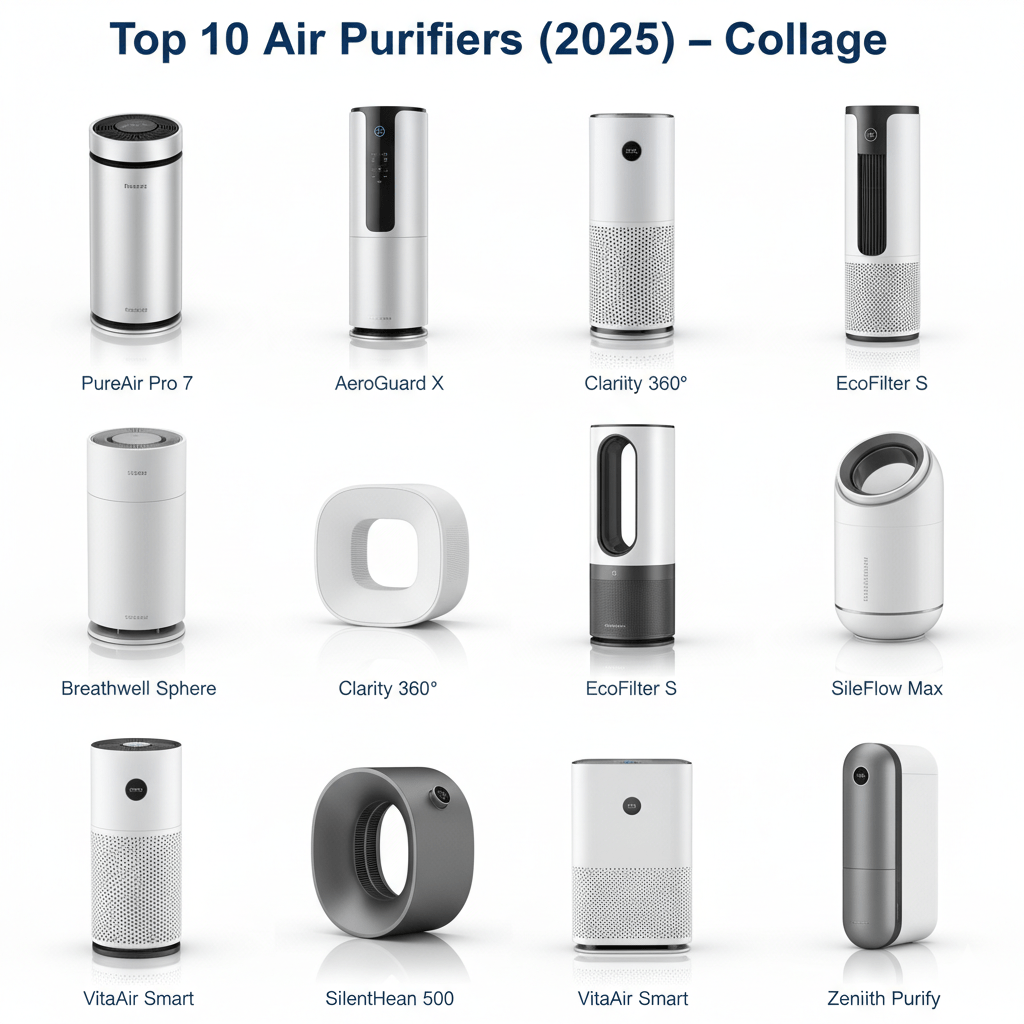 Top Picks by Segment
Best Under ₹10,000
AmazonBasics HEPA Air Purifier
Compact HEPA purifier for bedrooms and small rooms — simple, effective baseline option.
Sharp FP-J80 / FP-F40E (budget)
Sharp’s reliable budget purifiers (some with Plasmacluster) for dust and pollen control.
Best ₹10,000 – ₹15,000
Xiaomi Smart Air Purifier 4
Smart app control, solid CADR and value for mid-sized rooms.
Eureka Forbes Aeroguard AP700
Local support + HEPA + carbon filtration — practical mid-budget choice in India.
Best ₹15,000 – ₹20,000
Coway AirMega 150
Mid-premium pick with long filter life and quiet operation — great for living rooms.
Blueair Blue 3210
High-efficiency filtration with whisper-quiet operation for allergy sufferers.
Premium (₹20,000+)
Dyson Purifier TP09 (latest)
Premium sealed HEPA, Air Multiplier, smart sensors — premium build & performance.
Coway AirMega 250
Large-coverage model for open-plan homes — professional-grade cleaning.
Visual Comparison
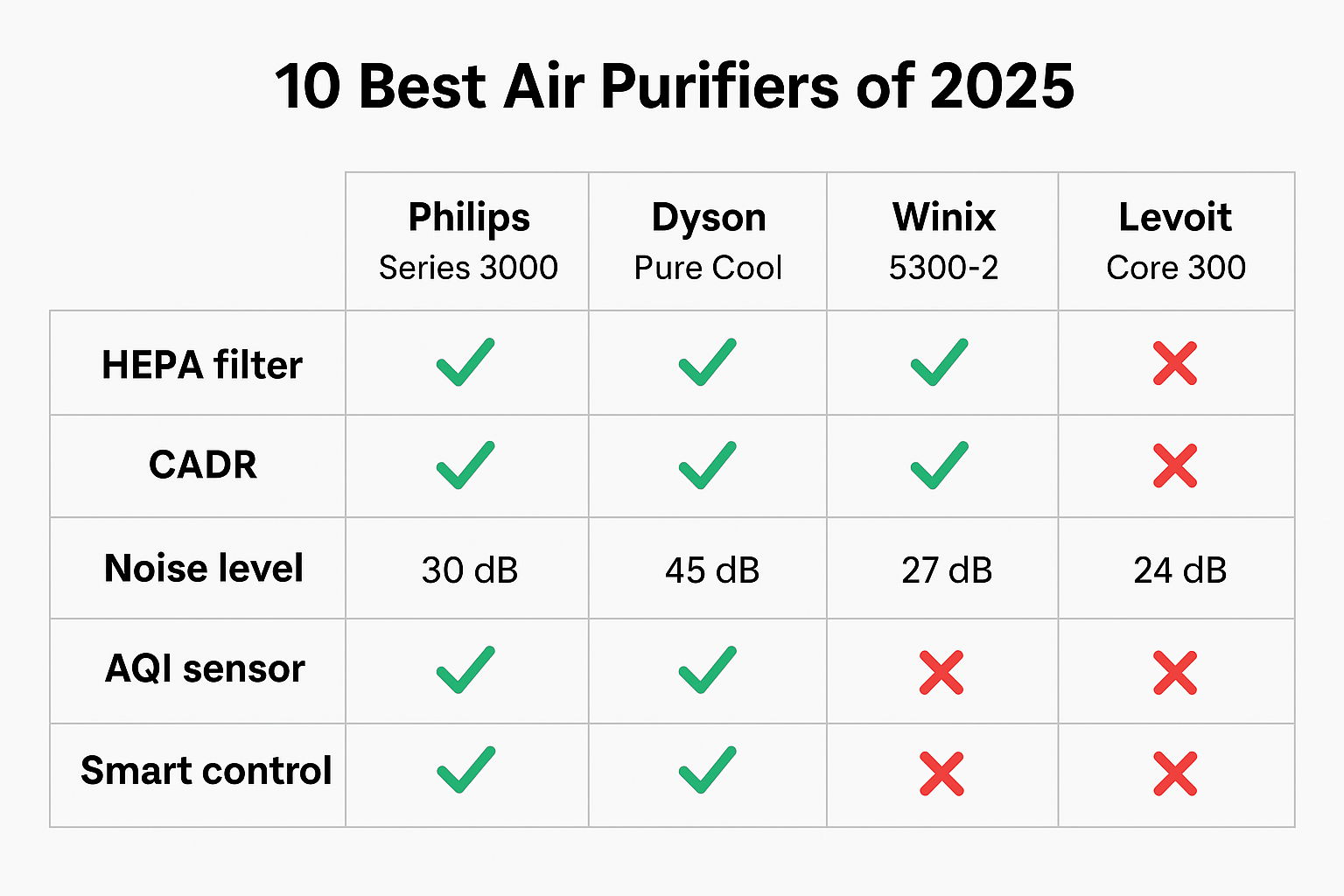
| Model | Best For | Filter | Notes | Check |
|---|---|---|---|---|
| Dyson TP09 | Premium / Large Rooms | Sealed HEPA + Carbon | Premium build, fan + purifier | Check → |
| Coway AirMega 150 | Living rooms | Green HEPA | Long filter life | Check → |
| Sharp FP-J80 / FP-F40E | Bedrooms / Small Rooms | HEPA + Plasmacluster | Good budget options | Check → |
| Philips AC1217 / AC2887 | Allergy sufferers | HEPA + VitaShield | Trusted sensors | Check → |
| Xiaomi Smart Air Purifier 4 | Value buyers | H13 + Carbon | App control | Check → |
❓ Frequently Asked Questions